

Early Music Collection
Early Music Collection
This artificial collection contains musical manuscripts collected by the Phillips Library. It is composed mostly of note books of handwritten music, including popular songs, dance tunes, hymns, and chamber music in staff notation. There are also new arrangements, original compositions, and musical exercises.
This artificial collection contains musical manuscripts collected by the Phillips Library. It is composed mostly of note books of handwritten music, including popular songs, dance tunes, hymns, and chamber music in staff notation. There are also new arrangements, original compositions, and musical exercises.
| The contents of this collection are primary sources evidencing musical culture in Boston and Essex County in the late eighteenth and nineteenth centuries. The inclusive dates of the collection are 1786 to 1872, and the locations referenced range from Brookline, Massachusetts to Moultonborough, New Hampshire, although most note books are from Essex County |
|
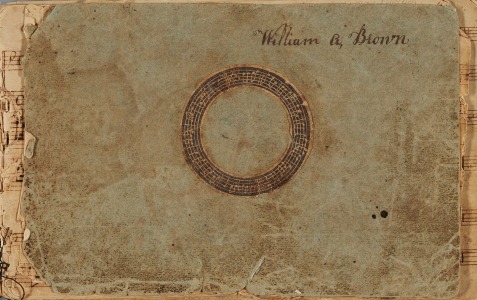
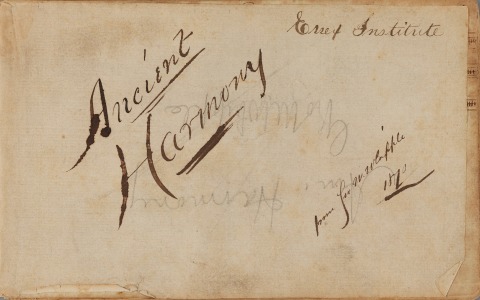
The manuscripts’ form and content both change considerably over time, which reflects the evolution of popular music taste during this period as well as the changing social worlds associated with music performance and instruction. The earliest manuscripts represent the leisure-time musical pursuits of people who had other occupations, many of whom are associated with notable families whose other papers are held by the Phillips Library, but the later items document the growth of a class of musicians and music teachers, for whom music was their principal occupation. Additionally, the earliest manuscripts in this collection are handbound, with their music noted on handwritten staves, while the later books are commercially bound and printed |
|
|
 |
This collection is especially rich in hymns, dance tunes, and songs, which suggest that church choirs, dances, and concerts were the centers of musical life north of Boston in this period. In aggregate, the manuscripts also demonstrate the development of a shared musical repertoire in this setting, as many of the same songs appear time and time again across notebooks, often arranged for different instruments. The instruments specified in the manuscripts are typical of the time period, ranging from solo fife, flute, clarinet, and violin in the earliest to piano, organ, and vocal ensembles in the latest. |
Overview
| The contents of this collection are primary sources evidencing musical culture in Boston and Essex County in the late eighteenth and nineteenth centuries. The inclusive dates of the collection are 1786 to 1872, and the locations referenced range from Brookline, Massachusetts to Moultonborough, New Hampshire, although most note books are from Essex County |
|
The manuscripts’ form and content both change considerably over time, which reflects the evolution of popular music taste during this period as well as the changing social worlds associated with music performance and instruction. The earliest manuscripts represent the leisure-time musical pursuits of people who had other occupations, many of whom are associated with notable families whose other papers are held by the Phillips Library, but the later items document the growth of a class of musicians and music teachers, for whom music was their principal occupation. Additionally, the earliest manuscripts in this collection are handbound, with their music noted on handwritten staves, while the later books are commercially bound and printed |
|
|
|
This collection is especially rich in hymns, dance tunes, and songs, which suggest that church choirs, dances, and concerts were the centers of musical life north of Boston in this period. In aggregate, the manuscripts also demonstrate the development of a shared musical repertoire in this setting, as many of the same songs appear time and time again across notebooks, often arranged for different instruments. The instruments specified in the manuscripts are typical of the time period, ranging from solo fife, flute, clarinet, and violin in the earliest to piano, organ, and vocal ensembles in the latest. |
Collection Organization
Collection Organization
Many of these manuscripts contain primarily vocal music, in the form of choir singers’ part books, books of hymns written for three or four voice parts, as well as secular song books with lyrics and melody lines for popular tunes. Some items also contain keyboard accompaniment parts (piano, organ, or unknown keyboard instrument) alongside lyrics and/or vocal melodies, and some manuscripts contain a mixture of all these musical forms. Within sacred music, the distinction between the accompanied and the unaccompanied reflects the historical shift from choral music without accompaniment, preferred by the area's first European settlers, to choral music with organ in a later period.
The majority of manuscripts in this collection contain music for one or more instruments, mainly melody parts, duets, and trios in various genres. While all of the music in these volumes is handwritten, some are handbound with hand-drawn staves, while others are commercially bound with pre-printed staff paper. Many volumes are personal songbooks, full of popular melodies written out for keyboard. Many of these are folk tunes and airs, while others come from contemporary light operas. Other volumes contain dance music, in the form of jigs, reels, hornpipes, cotillions, marches, musters, and waltzes. This music is generally written out in a single melody line in treble clef, and while the intended instrument is often unspecified, some volumes are written for flute, clarinet, fife, or violin.
Unbound papers make up a small, miscellaneous minority of the collection, although with similar content to the bound majority: songs, dance music, sacred and secular vocal music, and instructional material. All unbound material can be found on Phillips Library Digital Collections.
Catalogs
The Early Music Collection also includes handwritten catalogs from the Essex Institute Musical Library and the Salem Musical Library, which have since merged with the Peabody Essex Museum's Phillips Library. These lists are primarily inventories of published works and music periodicals, divided between vocal music, instrumental music, and musical literature. One volume is an address book containing a list of “Members of the Essex Institute Musical Library" as of October, 1869.
Selected Individuals
|
Many of the names referenced in this collection are associated with notable families in the history of Essex County, whose papers are housed in the Phillips Library’s collections. |
|
|
Stephen Wheatland
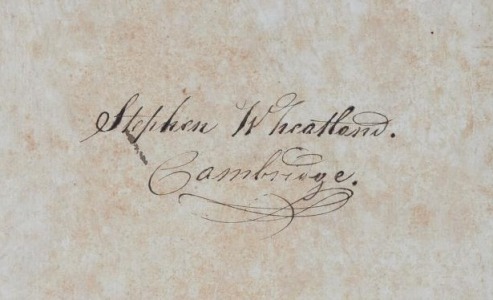
One volume is inscribed “Stephen Wheatland, Cambridge” and it was likely written by Stephen Goodhue Wheatland during his time at Harvard in the 1840s. Wheatland later became a politician in Salem and served as the city’s mayor from 1863 to 1864. The Phillips Library houses collections of papers associated with Stephen and his wife, Ann Maria Wheatland, as well as several other members of the Wheatland family. |
 |
 |
Sally Orne Pickman and Rebecca Taylor Pickman
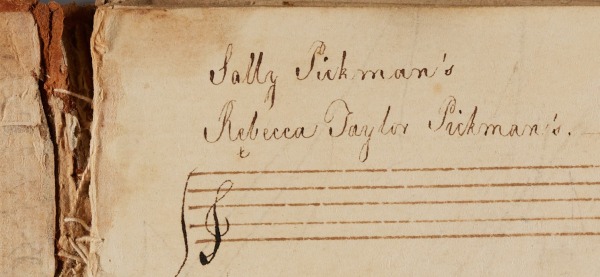
“Sally Pickman’s” and “Rebecca Taylor Pickman’s” names are inscribed in this volume. These girls were the granddaughters of Benjamin Pickman (1763-1843), a prominent Salem merchant who traded with India, China, the East and West Indies, and Europe. His papers and other Pickman papers are held by the Phillips Library. Sally and Rebecca’s parents were Sarah Orne and Clark Gayton Pickman. |
|
Henry Kemble Oliver
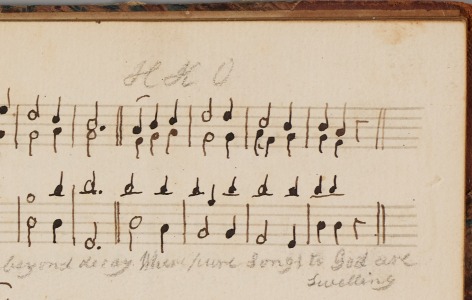
One volume includes compositions by “H. K. Oliver,” or Henry Kemble Oliver, who was an Essex County resident with a distinguished military and political career, as well as a reportedly excellent performer and composer. The Phillips Library holds a collection of his papers which includes a series on his music. |
 |
For more info on individuals asociated with this collection and related collections, see the Early Music Collection finding aid.
Selected Individuals
|
Many of the names referenced in this collection are associated with notable families in the history of Essex County, whose papers are housed in the Phillips Library’s collections. |
|
|
Stephen Wheatland
One volume is inscribed “Stephen Wheatland, Cambridge” and it was likely written by Stephen Goodhue Wheatland during his time at Harvard in the 1840s. Wheatland later became a politician in Salem and served as the city’s mayor from 1863 to 1864. The Phillips Library houses collections of papers associated with Stephen and his wife, Ann Maria Wheatland, as well as several other members of the Wheatland family. |
|
|
Sally Orne Pickman and Rebecca Taylor Pickman
“Sally Pickman’s” and “Rebecca Taylor Pickman’s” names are inscribed in this volume. These girls were the granddaughters of Benjamin Pickman (1763-1843), a prominent Salem merchant who traded with India, China, the East and West Indies, and Europe. His papers and other Pickman papers are held by the Phillips Library. Sally and Rebecca’s parents were Sarah Orne and Clark Gayton Pickman. |
|
Henry Kemble Oliver
One volume includes compositions by “H. K. Oliver,” or Henry Kemble Oliver, who was an Essex County resident with a distinguished military and political career, as well as a reportedly excellent performer and composer. The Phillips Library holds a collection of his papers which includes a series on his music. |
|
For more info on individuals asociated with this collection and related collections, see the Early Music Collection finding aid.