History of Salem's Settlement
Native Americans lived in the region for thousands of years before Europeans arrived. At the time of European contact in the early 17th century, Indigenous people referred to the area as Naumkaeg, meaning fishing place, and it was one of many territories in what is now northeastern Massachusetts controlled by the Pawtucket Confederation. European colonists settled Salem in 1626 and were led by Roger Conant from Cape Ann. In 1628, the Massachusetts Bay Colony replaced Conant with John Endecott, resulting in the 20th century celebrations glossing over Conant's role. Prior to the mass arrival of English settlers to the area, the indigenous population had been weakened through a combination of Smallpox outbreaks and wars with other tribes and Europeans. The colonists that arrived beginning in 1626 took advantage of this to further displace the original inhabitants.
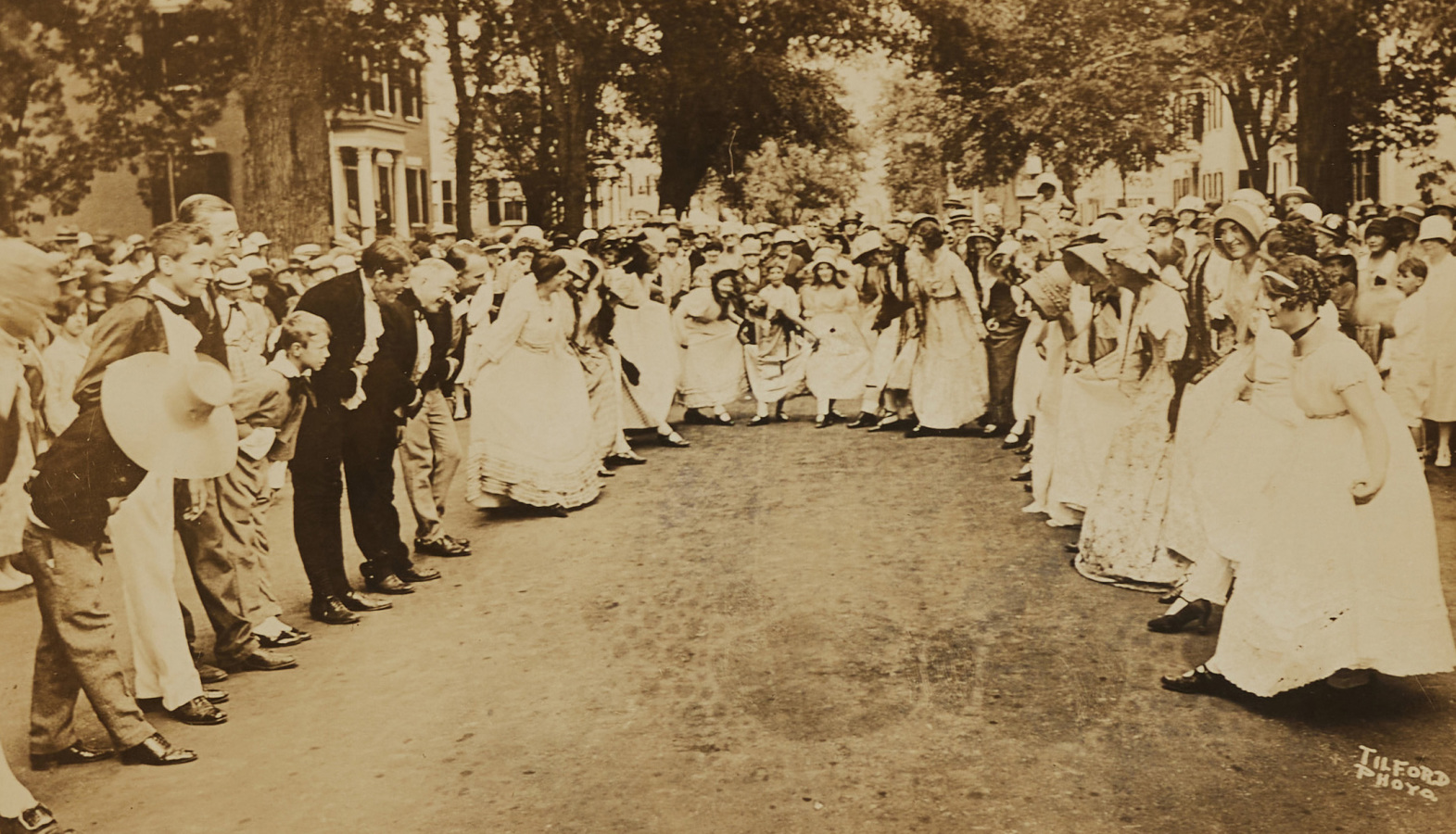
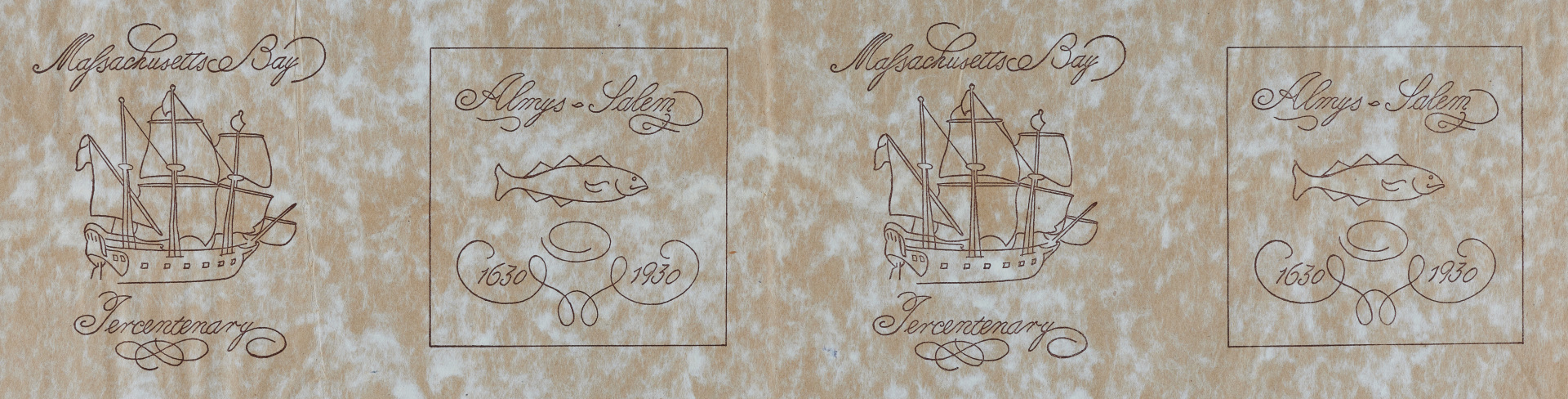
Although Indigenous people continue to live in the region to this day and have a different perspective on the development of Salem, their presence is barely seen in the Salem Tercentenary materials. As you view this collection, we invite you to consider who was included in the Salem and Massachusetts Tercentenary celebrations, how they are depicted, and which aspects of history are centered and which are marginalized.
History of Salem's Settlement
Native Americans lived in the region for thousands of years before Europeans arrived. At the time of European contact in the early 17th century, Indigenous people referred to the area as Naumkaeg, meaning fishing place, and it was one of many territories in what is now northeastern Massachusetts controlled by the Pawtucket Confederation. European colonists settled Salem in 1626 and were led by Roger Conant from Cape Ann. In 1628, the Massachusetts Bay Colony replaced Conant with John Endecott, resulting in the 20th century celebrations glossing over Conant's role. Prior to the mass arrival of English settlers to the area, the indigenous population had been weakened through a combination of Smallpox outbreaks and wars with other tribes and Europeans. The colonists that arrived beginning in 1626 took advantage of this to further displace the original inhabitants.
Although Indigenous people continue to live in the region to this day and have a different perspective on the development of Salem, their presence is barely seen in the Salem Tercentenary materials. As you view this collection, we invite you to consider who was included in the Salem and Massachusetts Tercentenary celebrations, how they are depicted, and which aspects of history are centered and which are marginalized.